Fashion

Your First Bridal Appointment: What to Expect, What to Bring, and How to Prepare

A calm, considered guide to enjoying your first wedding-dress appointment, understanding what feels right, and discovering a gown that reflects your personal bridal vision.

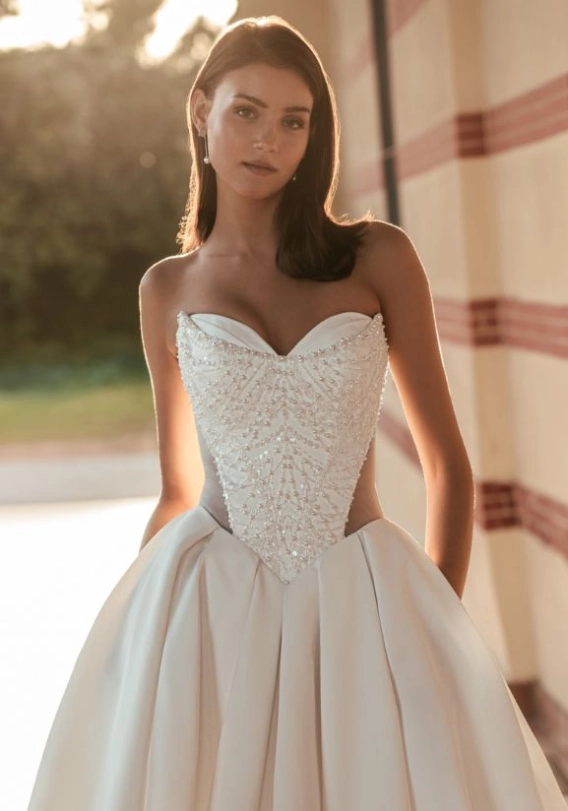
Your first bridal appointment is one of the first moments when an imagined wedding-day look becomes something tangible. A sculpted bodice, the movement of a chiffon skirt or the quiet glow of Mikado can feel entirely different in person than it appears on a screen.

It's natural to arrive with excitement, uncertainty, or a combination of both. You may have saved hundreds of images, or you may have very little idea where to begin. Neither position puts you at a disadvantage.

A thoughtful appointment gives you the space to understand your preferences through experience. At an authorized Enzoani retailer, a bridal stylist can help translate ideas such as modern, romantic, minimal or dramatic into meaningful design choices: silhouette, neckline, fabric, structure, volume, train, and transformative details.

The aim is not to arrive knowing the answer. It is to leave knowing more about the way you want your wedding gown to look, move and feel.

What Should You Do Before Booking a Bridal Appointment?

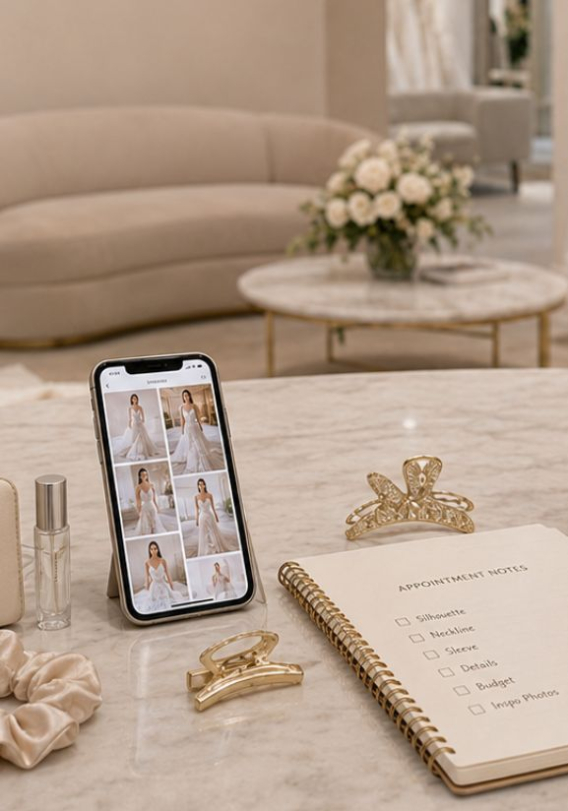
Before booking, identify an authorized retailer that carries the designer or collection you want to experience. Review the boutique’s website or contact its team to ask about appointment availability, price range, guest limits, accessibility, sample sizing, and any gowns you particularly hope to try.

Enzoani’s 2027 gowns are available through authorized bridal boutiques, but the specific samples carried can vary by retailer and region. Contacting the boutique before your visit gives its team an opportunity to confirm what is currently available.

Share the essential details

When booking, be ready to provide:

  • Your wedding date, or your approximate timeframe
  • Your venue or likely setting
  • The collection and gown names that interest you
  • Your approximate gown budget
  • Your usual clothing size as a starting reference
  • Any access, privacy or mobility requirements
  • The number of guests you hope to bring
  • Whether you would like to take photographs or video
  • Whether a particular sample size is important to your experience

You do not need to have your entire wedding planned. A broad sense of season, setting, and formality is enough to help a stylist begin making relevant suggestions.

Establish a complete budget

Share the amount you are comfortable allocating to the gown itself. Separately, consider whether you also need to budget for alterations, accessories, a veil, shoes, specialist underwear, taxes, or delivery-related charges.

A clear budget allows the stylist to curate gowns you can seriously consider. It also protects the appointment from the disappointment of falling in love with an option that sits outside the amount you intend to spend.

Ask the retailer what is included in its quoted prices and what would be arranged separately. Policies and services differ between boutiques.

What Happens at a First Bridal Appointment?

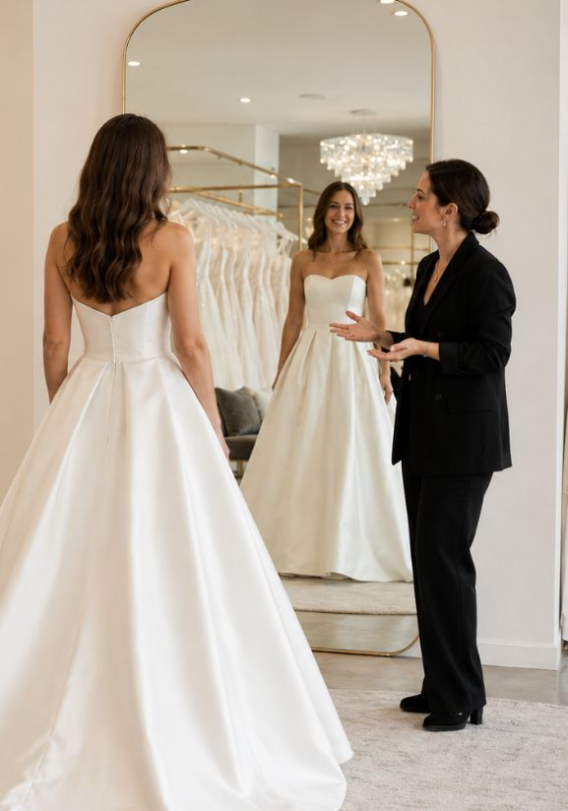
A first bridal appointment generally includes an initial conversation, a curated selection of gowns, assisted try-ons, time to evaluate each look, and a discussion of possible next steps. The exact format and length depend on the individual boutique.

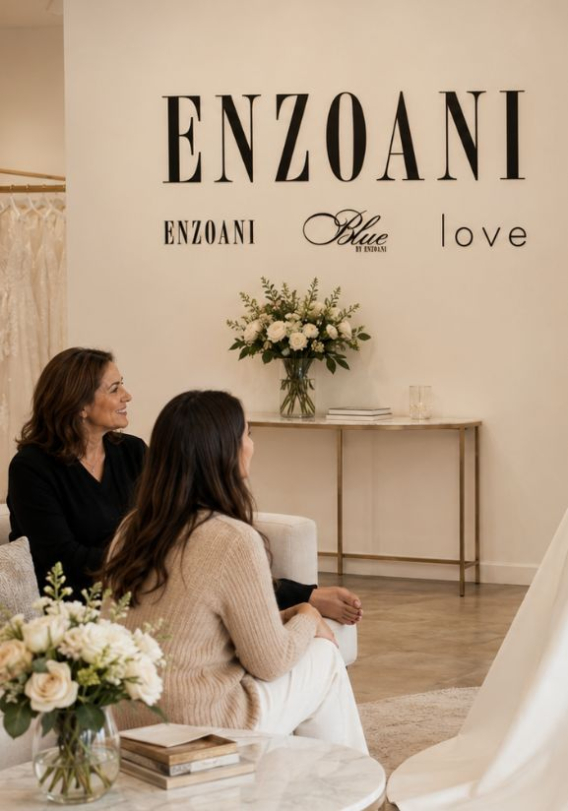
1. You'll begin with a conversation

Your stylist may ask about:

  • How you want to feel on your wedding day
  • Your venue and season
  • The level of formality
  • Silhouettes or gowns you have saved
  • Details you already know you like or dislike
  • Your preferred level of support and coverage
  • How much skirt volume you enjoy
  • Whether you want one consistent look or a transformation
  • Your practical budget and timeframe

Try to describe the feeling as well as the visual style. Words such as refined, sculptural, soft, fashion-led, effortless, or romantic can be more useful than arriving with one rigidly defined silhouette.

2. The stylist will create an initial edit

Some boutiques invite brides to browse the rails with a stylist; others select the first gowns based on the consultation. You might begin with designs that closely reflect your saved inspiration, followed by one or two considered alternatives.

An open mind does not mean ignoring your preferences. It means allowing the appointment to confirm or challenge them.

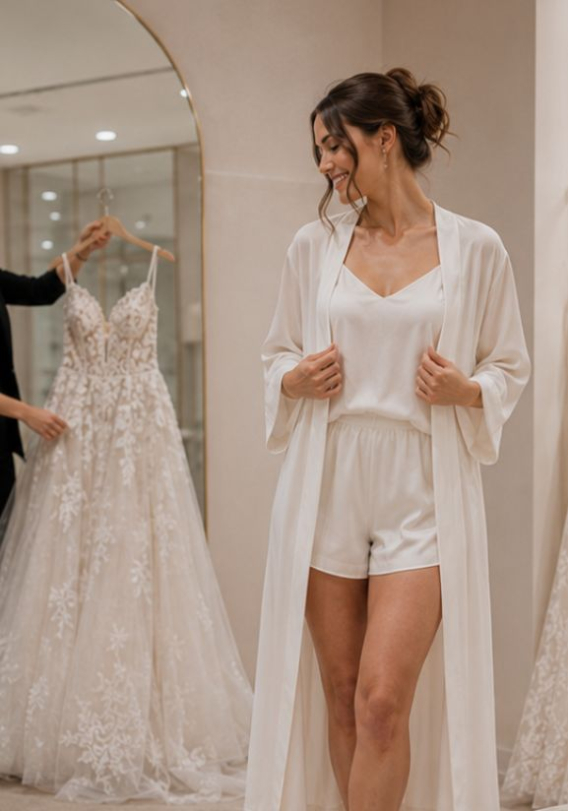
3. You'll try on the gowns with assistance

Wedding gowns often have layers, trains, internal construction, or closures that are easier to manage with an experienced stylist. The stylist may help position the gown and temporarily adjust a sample so you can understand its intended proportions.

Let the boutique know in advance or at the beginning of the appointment how much changing-room assistance feels comfortable to you.

4. You'll evaluate more than the mirror image

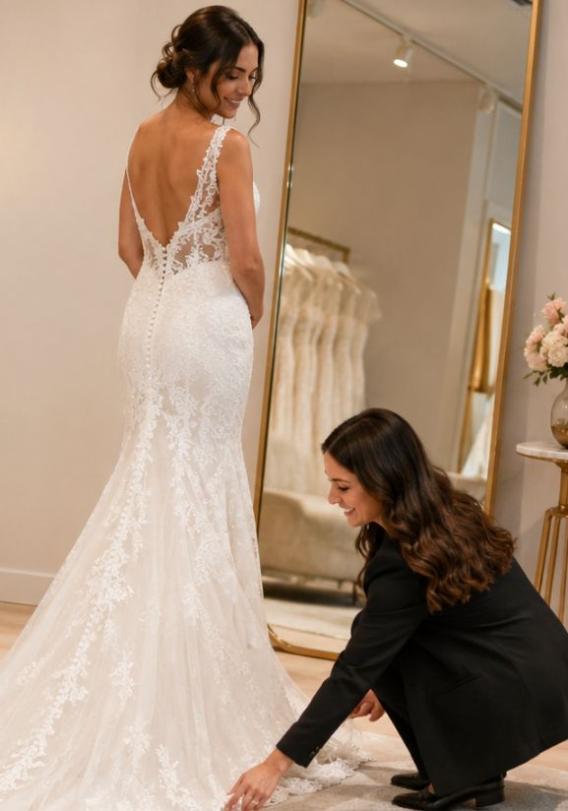
Once a gown is in place, look from the front, side, and back. Walk, turn, and sit if the boutique permits. Notice whether you feel supported, restricted, weightless, grounded, dramatic, or relaxed.

A beautiful first impression matters, but so does the way the gown behaves as you move.

5. You may shortlist, revisit, or make a decision

Some brides recognize a clear favorite during the first appointment. Others leave with a more precise understanding of their preferred silhouette, neckline, or fabric and return for a second visit.

Both outcomes are valuable. You do not need to manufacture an immediate emotional reaction for the appointment to have been successful.

What Should You Wear to Try On Wedding Dresses?

Wear clothing that is easy to change out of and undergarments that make you feel comfortable. Avoid anything that turns changing between gowns into an unnecessary complication.

A helpful appointment outfit might include:

  • Seamless underwear close to your skin tone
  • An optional strapless or convertible bra
  • Optional shapewear that you already enjoy wearing
  • Simple clothing that can be removed easily
  • Minimal jewelry that will not snag or catch on delicate fabrics
  • Shoes that are easy to take on and off / are the same height as the ones you'll prefer to wear on the big day

Arrive in a way that helps you recognize yourself in the mirror. Light makeup, no makeup, loose waves, or a simple tied-back style can all work. A good rule of thumb is to feel like yourself while avoiding products -- such as transferable body makeup or fresh tanning products -- that could mark a sample gown.

How Much Wedding-Dress Research Should You Do?

Do enough research to communicate a direction, but not so much that you feel committed to a conclusion before trying anything on.

Begin with three words

Choose three words that describe how you want to feel. For example:

  • Modern, refined, confident
  • Romantic, soft, effortless
  • Sculptural, fashion-led, dramatic
  • Timeless, clean, elegant

These words give the stylist room to interpret your vision across several silhouettes.

Separate the design into parts

Instead of searching only for one complete gown, consider:

  • Silhouette: fitted, A-line, column or ballgown
  • Structure: soft draping or architectural corsetry
  • Neckline: sweetheart, scoop, high neck or another preferred shape
  • Fabric: lace, crepe, Mikado, satin, tulle or chiffon
  • Volume: close to the body, softly opening, or dramatically full
  • Coverage: strapless, sleeved, off-the-shoulder, or transformative
  • Train: restrained, sweeping, or statement-making
  • Detail: minimal, floral, embellished, or textural

A bride who cannot name a preferred silhouette may still know that she wants a clean fabric, visible structure, and a statement back. That is already a strong starting point.

How Should a Wedding Dress Feel During the Appointment?

A wedding dress should support the way you want to experience your wedding day. That may mean a secure, constructed bodice; a softly moving skirt; a close, sculpted silhouette; or a transformative design that changes between ceremony and celebration.

Notice the structure

Ask yourself:

  • Does the bodice feel secure?
  • Can I breathe naturally?
  • Do I like the position of the waistline?
  • Am I comfortable with the depth and shape of the neckline?
  • Does the gown remain in place as I move?
  • Would I like more or less internal support?

A sample will not necessarily fit as your ordered and altered gown will, but it should still help you understand the design’s intended structure.

Test movement

Take several steps. Turn in both directions. Sit if permitted. Lift your arms gently. Imagine greeting guests, entering the ceremony, dining, and dancing.

Movement is especially important when comparing:

  • A fitted trumpet to a full ballgown
  • Structured Mikado to fluid chiffon
  • A column gown to a layered A-line
  • A gown with an overskirt against the same gown without it

Look at every angle

Wedding gowns are designed to be experienced from all perspectives. Look at:

  • The neckline and bodice from the front
  • The waist and skirt transition from the side
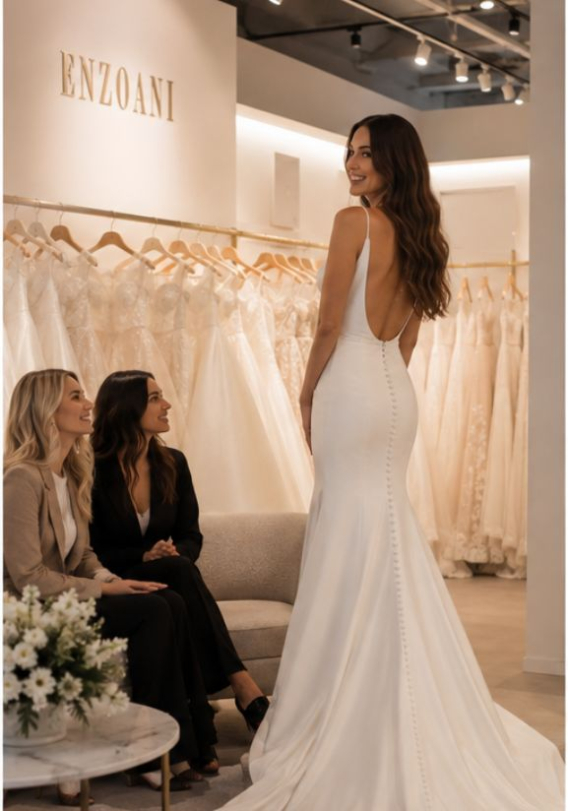
  • The closure, lace placement, and train from behind
  • The gown while walking away
  • The fabric and detail in natural and indoor light
  • The silhouette in a short movement video, where allowed

Assess the train

A train may feel different when fully arranged than when gathered behind you. You can ask the stylist to show you:

  • The complete train
  • How it moves during a turn
  • How much space it occupies
  • Whether the design is likely to require a bustle
  • Which alterations or bustle options the retailer recommends discussing later

Experience every detachable feature

When a gown includes detachable elements like sleeves, an inner jacket, a bolero, or an overskirt, try the complete transformation. Don't evaluate only the first version.

Walk and photograph both looks. Check how the attachment sits from the front, side, and back. Consider when you would make the change and whether both versions feel equally intentional.

Who Should You Bring to a Bridal Appointment?

Bring the people whose presence helps you hear your own opinion more clearly.

A small, trusted group often creates a calmer appointment than a large gathering with competing tastes. Choose guests who:

  • Understand your personal style
  • Respect your budget
  • Can offer honest feedback without taking over
  • Will allow you to speak first
  • Support your decision even when it differs from their own preference

Ask the retailer about its guest limit before inviting anyone. Some boutiques have space restrictions or specific appointment formats.

When an important person cannot attend, ask whether video calling is permitted. You may also decide to attend the first appointment alone or with one trusted person, then bring a wider group once you have identified a clear direction.

Establish a feedback rule

Before the appointment, tell your guests what kind of feedback will help. One particularly useful rule is:

The bride speaks first.

After seeing yourself in a gown, share your initial reaction before anyone else comments. This helps prevent another person’s enthusiasm or hesitation from becoming your first interpretation of the dress.

Questions to Ask Your Bridal Stylist

A strong appointment is a conversation. Consider asking:

  1. Which silhouettes create the kind of movement I am describing?
  2. How does this sample differ from the fit of an ordered and altered gown?
  3. What internal structure does this design have?
  4. Can the neckline, straps, or sleeves be adjusted during alterations?
  5. How will the fabric behave while walking and sitting?
  6. Can I see the complete train from behind?
  7. Does the gown include detachable elements, or are they ordered separately?
  8. Can I try every version of the detachable styling?
  9. What color and lining options are currently offered?
  10. What is included in the quoted price?
  11. How does this retailer arrange alterations?
  12. What deposit and cancellation terms apply?
  13. What ordering timeframe applies to this gown and my wedding date?
  14. Can the boutique confirm availability before a return appointment?
  15. What should I bring to a second appointment, if needed?

Only the retailer should confirm current prices, ordering terms, sample availability, color options, and delivery expectations.

How Do You Know Which Wedding Dress Is Right?

The right gown is the one that best aligns with your style, physical comfort, and wedding-day priorities -- not necessarily the one that produces the loudest reaction in the room.

When two or three gowns remain, compare them using the same questions.

The Enzoani bridal decision framework

Rate each gown privately against these six considerations:

1. Identity

Do I recognize myself in this gown, or do I feel as though I am performing someone else’s idea of a bride?

2. Silhouette

Do I enjoy the proportions from the front, side, and back?

3. Support

Does the construction offer the level of security and coverage I prefer?

4. Movement

Can I imagine walking, sitting, greeting people, and celebrating in it?

5. Setting

Does the gown feel connected to my venue and intended atmosphere without being controlled by them?

6. Memory

After trying several dresses, which details can I still picture clearly without looking at a photograph?

You can also ask:

  • Which gown would I most want to put on again?
  • Which compromise matters least to me?
  • Am I comparing the actual gowns or the reactions they received?
  • Would I still choose this design without an audience?
  • Does the transformation add meaningful value, or do I strongly prefer one version?
  • Am I comfortable with the practical implications of the train, fabric, and structure?

A decision can feel joyful and certain without being theatrical. Quiet confidence is still confidence.

What Should You Do After the Appointment?

Before leaving, note the correct designer, collection, and gown name for each serious contender. Ask the boutique for any permitted photographs and the relevant purchasing information.

Write down:

  • How each gown felt
  • Which details you loved
  • Anything that made you hesitate
  • The quoted price and what it included
  • Detachable pieces or accessories discussed
  • Retailer-specific ordering and alterations information
  • Any deadline the boutique has confirmed for your circumstances

Try not to continue collecting endless new inspiration immediately after the appointment. Give yourself enough quiet to process what you learned and liked.

When one gown remains on your mind, you can arrange a return visit and experience it again. Re-check movement, the complete back view, the train, and any detachable elements before making your final decision.

And remember -- there is also absolutely nothing wrong with making your final decision and saying "yes" to the dress at the very first appointment. Finding clarity and confidence in your dress decision does not have to be a lengthy process.

Begin with Curiosity, Not Pressure

Your first bridal appointment does not require a perfectly formed vision. It asks only that you arrive willing to notice what feels like you.

Pay attention to the construction that makes you feel supported, the fabric that moves as you imagined, and the details that remain in your mind after the gown has been returned to the rack. Whether you are drawn to the sculptural presence of Enzoani, the refined balance of Blue by Enzoani, or the softer romance of Love by Enzoani, an in-person appointment reveals qualities no photograph can fully communicate.

Explore the 2027 collections, then find an authorized Enzoani retailer to experience the fit, movement, and considered craftsmanship of each gown for yourself.